Hue Imperial City: The Complete Travel Guide to Vietnam’s UNESCO Royal Citadel (2026)
The Hue Imperial City is the most important historical attraction in Central Vietnam and the last surviving royal citadel of the Nguyen Dynasty. Located in the heart of Hue, this UNESCO World Heritage Site preserves nearly 150 years of imperial history, showcasing magnificent palaces, ancient temples, ceremonial halls, peaceful gardens, and impressive royal architecture.
More than just an ancient fortress, the Imperial City tells the story of Vietnam’s final royal dynasty. Every gate, courtyard, and palace reflects the country’s political, cultural, and spiritual heritage, making it one of the best places to visit for anyone interested in Vietnamese history and architecture.
Whether you’re planning your first trip to Hue or looking to learn more about the Nguyen Dynasty, this guide covers everything you need to know, including ticket prices, opening hours, must-see attractions, travel tips, nearby landmarks, and the best time to visit.
If you’re planning to explore Hue in one day, combine the Imperial City with Thien Mu Pagoda, Minh Mang Tomb, and Khai Dinh Tomb through our Hue City Private Tour.
Quick Facts About Hue Imperial City
| Information | Details |
|---|---|
| Official Name | Hue Imperial City (Hoàng Thành Huế) |
| UNESCO Status | World Heritage Site (1993) |
| Location | Hue City, Central Vietnam |
| Built | 1804–1833 |
| Founder | Emperor Gia Long |
| Dynasty | Nguyen Dynasty |
| Opening Hours | 7:00 AM – 5:30 PM |
| Suggested Visit Duration | 3–4 Hours |
| Best Time to Visit | January to April |
| Famous Highlights | Ngo Mon Gate, Thai Hoa Palace, Forbidden Purple City, Nine Dynastic Urns |
Why Visit Hue Imperial City?
Among all the attractions in Vietnam, Hue Imperial City stands apart as the country’s most remarkable royal heritage site. While many ancient capitals across Asia have been partially lost to time, Hue continues to preserve an extraordinary collection of palaces, temples, gates, gardens, and ceremonial buildings that once formed the political and cultural heart of the Nguyen Dynasty.
Walking through the massive Ngo Mon Gate feels like stepping back into nineteenth-century Vietnam. Inside the citadel, you’ll discover elegant wooden palaces, tranquil lotus ponds, beautifully restored halls, and quiet courtyards that reveal how Vietnam’s emperors once lived, ruled, and celebrated important royal ceremonies.
Unlike many historical attractions that focus on a single monument, Hue Imperial City offers an immersive journey through an entire royal complex. Visitors can admire traditional Vietnamese architecture, learn about Confucian philosophy, explore sacred temples, and gain a deeper understanding of the country’s last imperial dynasty.
Whether you’re passionate about history, architecture, photography, or cultural heritage, the Imperial City delivers one of the richest travel experiences in Vietnam.
Why Is Hue Imperial City a UNESCO World Heritage Site?
In 1993, UNESCO recognised the Complex of Hue Monuments as a World Heritage Site, acknowledging its outstanding cultural value and historical importance.
The Imperial City represents the finest example of Vietnamese royal architecture and urban planning. Built according to feng shui principles, the complex harmoniously combines fortified walls, ceremonial palaces, sacred temples, royal gardens, and waterways into a unified masterpiece that has survived centuries of political change and conflict.
Today, ongoing restoration projects continue to preserve this remarkable heritage, allowing visitors to experience one of Southeast Asia’s most important imperial capitals while supporting the conservation of Vietnam’s cultural legacy.
A Brief History of Hue Imperial City
The history of Hue Imperial City began in 1802, when Emperor Gia Long unified Vietnam after decades of civil war and established the Nguyen Dynasty. Seeking a location that could serve as both the political centre and symbolic heart of the nation, he selected Hue because of its strategic position between northern and southern Vietnam.
Construction of the Imperial City officially started in 1804 and continued for nearly three decades. Thousands of skilled craftsmen, soldiers, and labourers worked together to build one of Southeast Asia’s most impressive royal capitals. Inspired by Beijing’s Forbidden City while embracing traditional Vietnamese architecture and feng shui principles, the complex became the seat of imperial power for the next 143 years.
The royal capital was carefully designed with three concentric layers, each serving a distinct purpose.
| Area | Purpose |
|---|---|
| Capital Citadel (Kinh Thanh) | Protected the entire royal capital with massive walls, moats, and defensive gates. |
| Imperial City (Hoàng Thành) | Administrative and ceremonial centre where important state affairs took place. |
| Forbidden Purple City (Tử Cấm Thành) | Private residence of the emperor, royal family, and selected court officials. |
This sophisticated layout reflected not only military strength but also Confucian philosophy, royal hierarchy, and the emperor’s role as the “Son of Heaven.”
For nearly a century and a half, 13 Nguyen emperors ruled Vietnam from within these walls. Important events such as royal coronations, diplomatic receptions, military ceremonies, and national celebrations all took place inside the Imperial City, making it the political and cultural heart of Vietnam until the monarchy ended in 1945.
Like many historic landmarks, Hue Imperial City has endured numerous challenges throughout its long history. The complex suffered damage during the French colonial period and was heavily affected by the Battle of Hue in 1968. Despite these losses, extensive restoration projects have successfully preserved many of its most iconic buildings while carefully conserving the remaining ruins as reminders of Vietnam’s remarkable past.
Today, visitors can walk through beautifully restored palaces alongside original archaeological remains, creating a unique experience that combines history, architecture, and heritage conservation.
UNESCO World Heritage Recognition
One of the defining moments in the history of Hue Imperial City came in 1993, when UNESCO officially recognised the Complex of Hue Monuments as a World Heritage Site.
This international recognition confirmed the site’s outstanding cultural significance and highlighted its importance as one of Asia’s finest surviving examples of imperial architecture and urban planning. Since then, continuous conservation projects have helped restore damaged buildings while protecting the authenticity of the original structures.
UNESCO recognised Hue for several exceptional values:
- Outstanding royal architecture.
- Sophisticated urban planning based on feng shui.
- Exceptional cultural and historical significance.
- Traditional Vietnamese craftsmanship.
- The legacy of the Nguyen Dynasty.
- Harmony between architecture and the surrounding natural landscape.
Today, Hue Imperial City welcomes millions of visitors each year and remains one of Vietnam’s most visited UNESCO heritage attractions.
The Cultural Significance of Hue Imperial City
Hue Imperial City is much more than a former royal residence. It represents the highest achievement of Vietnam’s imperial civilisation and continues to shape the country’s cultural identity today.
For more than a century, every important national ceremony took place within these walls. Royal coronations, diplomatic receptions, Confucian rituals, military celebrations, and religious ceremonies all reflected the power and sophistication of the Nguyen Dynasty.
Beyond its political importance, the Imperial City also became a centre of Vietnamese art and craftsmanship. Visitors can admire exquisite wooden carvings, colourful ceramic mosaics, royal calligraphy, lacquered decorations, dragon sculptures, and traditional roof ornaments that have inspired generations of Vietnamese artisans.
Many of these traditional techniques continue to influence architecture, interior design, and cultural preservation projects throughout Vietnam today.
For travellers who want to gain a deeper understanding of Vietnam’s royal heritage, combining the Imperial City with the nearby Hue Museum of Royal Antiquities provides valuable insight into the daily lives of the Nguyen emperors and their court.
The Architecture of Hue Imperial City
One of the most fascinating aspects of Hue Imperial City is the way its architecture blends military engineering, royal symbolism, spiritual beliefs, and natural landscapes into a single harmonious masterpiece.
Unlike many fortified cities that focus purely on defence, Hue was carefully planned according to ancient feng shui principles. The Perfume River flows gracefully in front of the citadel, while Ngu Binh Mountain stands proudly behind it, creating a natural balance believed to bring prosperity, stability, and longevity to the empire.
Inside the massive stone walls, elegant palaces, lotus ponds, temples, gardens, bridges, and ceremonial courtyards are arranged with remarkable symmetry. Every pathway, building, and decorative detail reflects the strict hierarchy of the Nguyen court while creating a peaceful atmosphere that still captivates visitors today.
As you continue exploring the Imperial City, you’ll discover that every gate, palace, and courtyard tells a different chapter of Vietnam’s royal history, making this UNESCO World Heritage Site one of the most rewarding cultural experiences in Southeast Asia.
Discover the Stunning Architecture of Hue Imperial City
The architecture of Hue Imperial City is one of the main reasons why millions of travelers visit this UNESCO World Heritage Site every year. More than simply serving as the residence of Vietnam’s emperors, the Imperial City was carefully designed to express royal authority, Confucian philosophy, and harmony between nature and architecture.
Inspired by the Forbidden City in Beijing while preserving distinctive Vietnamese characteristics, the complex combines massive defensive walls, elegant palaces, sacred temples, lotus ponds, and beautifully landscaped gardens into one extraordinary royal capital.
Unlike many historical attractions where visitors see only isolated monuments, Hue Imperial City allows you to explore an entire royal city that once governed Vietnam for nearly a century and a half.
Ngo Mon Gate – The Grand Entrance to the Imperial City
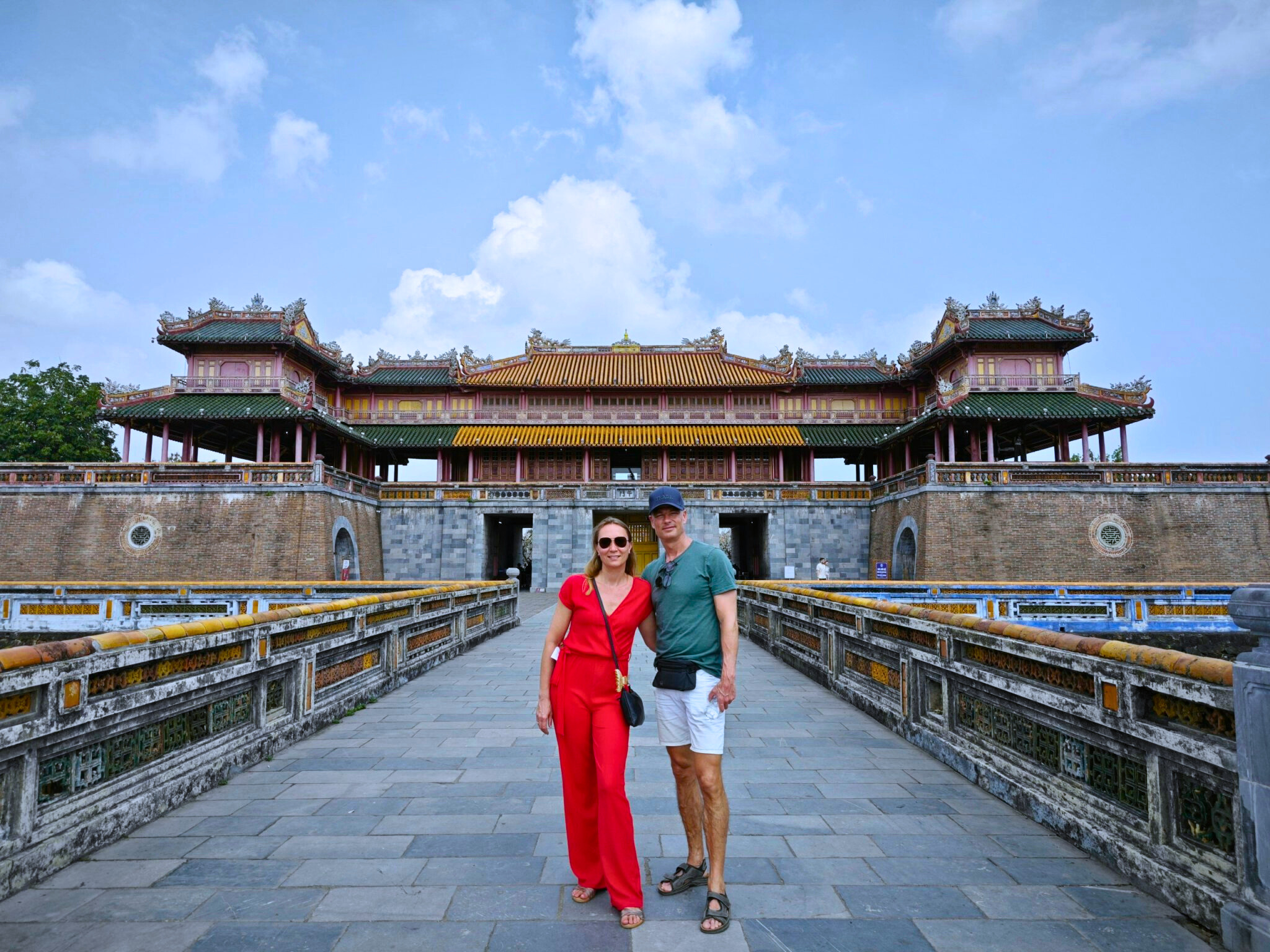
Every journey through Hue Imperial City begins at Ngo Mon Gate, the most iconic entrance to the royal citadel.
Completed in 1833 during the reign of Emperor Minh Mang, Ngo Mon Gate served as the ceremonial entrance reserved exclusively for the emperor. Royal processions, military celebrations, and important national events all passed beneath this magnificent gateway.
Standing before the gate today, visitors are immediately impressed by its massive stone platform, elegant Five Phoenix Pavilion, and perfectly symmetrical design. It is also one of the most photographed landmarks in Hue and an excellent place to begin exploring the UNESCO heritage complex.
For photographers, early morning provides the best opportunity to capture Ngo Mon Gate with soft natural light and fewer visitors.
Thai Hoa Palace – The Throne Hall of the Nguyen Dynasty
Located directly behind Ngo Mon Gate, Thai Hoa Palace was the ceremonial heart of the Nguyen Dynasty.
This magnificent palace witnessed many of the most important events in Vietnamese royal history, including imperial coronations, diplomatic receptions, royal birthdays, and important court ceremonies.
Inside the palace, visitors can admire beautifully restored wooden columns covered in golden lacquer, intricate dragon carvings, traditional Vietnamese motifs, and the emperor’s magnificent throne positioned beneath an elaborately decorated ceiling.
Every architectural detail was carefully designed to reinforce the emperor’s supreme authority while reflecting harmony between heaven, earth, and humanity according to Confucian beliefs.
Today, Thai Hoa Palace remains one of the highlights of every visit to Hue Imperial City.
Forbidden Purple City – The Emperor’s Private Residence
Hidden behind the ceremonial buildings lies the Forbidden Purple City, once the most restricted area within the entire royal complex.
Only the emperor, members of the royal family, selected concubines, and trusted servants were permitted to enter this private residence.
Although much of the Forbidden Purple City was destroyed during the wars of the twentieth century, ongoing restoration projects continue to reveal its former grandeur. Visitors can now explore restored buildings alongside archaeological remains that provide valuable insight into the daily lives of Vietnam’s last emperors.
Walking through these peaceful courtyards offers a fascinating glimpse into the private world that once existed behind the public ceremonies of the imperial court.
The Mieu Temple
One of the most sacred buildings inside the Imperial City is The Mieu Temple, dedicated to the emperors of the Nguyen Dynasty.
This elegant ancestral temple was built to honour the rulers who shaped Vietnam’s final imperial era. Even today, the temple remains an important place of remembrance where traditional ceremonies continue to be held on special occasions.
Visitors often notice the peaceful atmosphere created by ancient wooden architecture, beautifully decorated altars, and carefully maintained gardens surrounding the temple.
For those interested in Vietnamese history and ancestor worship, The Mieu Temple provides one of the most meaningful experiences within the Imperial City.
The Nine Dynastic Urns
Standing proudly in front of The Mieu Temple are the famous Nine Dynastic Urns, regarded as masterpieces of Vietnamese bronze casting.
Commissioned by Emperor Minh Mang in the nineteenth century, each enormous bronze urn represents one Nguyen emperor and symbolises the strength, stability, and continuity of the dynasty.
Unlike ordinary decorative objects, the urns are covered with detailed carvings depicting mountains, rivers, forests, animals, flowers, and other natural elements that celebrate the beauty and diversity of Vietnam.
Together, they are considered one of the greatest artistic achievements of the Nguyen Dynasty and remain among the most valuable cultural treasures preserved within Hue Imperial City.
Duyet Thi Duong Royal Theatre
Another hidden gem inside the Imperial City is Duyet Thi Duong Royal Theatre, one of the oldest surviving royal theatres in Vietnam.
Built for performances exclusively attended by the emperor and members of the royal family, the theatre once hosted traditional court music, dance performances, and ceremonial entertainment.
Today, visitors may have the opportunity to watch performances of Nha Nhac, the elegant royal court music recognised by UNESCO as an Intangible Cultural Heritage of Humanity.
Watching a traditional performance inside this beautifully restored theatre offers a unique opportunity to experience the artistic traditions that once entertained Vietnam’s imperial court.
Royal Gardens and Peaceful Courtyards
Beyond the grand palaces and ceremonial halls, Hue Imperial City is filled with peaceful gardens that provide a welcome escape from the busy tourist routes.
Shaded walkways, lotus ponds, ancient trees, ornamental plants, and traditional pavilions create a relaxing environment where visitors can slow down and appreciate the beauty of Vietnamese landscape design.
These gardens were carefully planned to provide the emperor and members of the royal family with spaces for relaxation, poetry, meditation, and private gatherings.
Today, they remain some of the most photogenic and tranquil areas within the UNESCO World Heritage Site.
For travelers planning to continue exploring Hue’s royal heritage, the nearby Minh Mang Tomb, Khai Dinh Tomb, and Thien Mu Pagoda perfectly complement a visit to the Imperial City. Our Hue City Private Tour combines these iconic attractions into one unforgettable day, allowing you to experience the very best of Hue’s imperial and spiritual history.
Planning Your Visit to Hue Imperial City
A little planning can make your visit to Hue Imperial City much more enjoyable. Although many first-time visitors assume they can explore the citadel in an hour or two, the reality is quite different. Covering hundreds of hectares and home to dozens of palaces, temples, museums, gardens, and ceremonial spaces, the Imperial City deserves at least half a day if you want to appreciate its history and architecture.
Whether you’re travelling independently or joining a guided tour, knowing the opening hours, ticket prices, suggested walking routes, and the best visiting times will help you make the most of your experience.
Hue Imperial City Opening Hours
Hue Imperial City is open every day, including weekends and Vietnamese public holidays.
| Information | Details |
|---|---|
| Opening Hours | 7:00 AM – 5:30 PM |
| Days Open | Monday – Sunday |
| Last Recommended Entry | Before 3:00 PM |
To fully explore the complex without feeling rushed, it’s best to arrive early in the morning or no later than mid-afternoon.
Hue Imperial City Tickets
Entrance tickets are managed by the Hue Monuments Conservation Centre and may vary over time.
| Ticket Type | Approximate Price |
|---|---|
| Adult | Around 200,000 VND |
| Children | Discounted |
| Combo Ticket | Available for multiple Hue monuments |
If you’re planning to visit several royal tombs during your stay, purchasing a combination ticket often provides better value than buying individual tickets.
Before your trip, it’s worth checking the latest ticket prices on the official website or through your tour provider, especially during peak travel seasons.
How Long Should You Spend at Hue Imperial City?
The ideal amount of time depends on your interests.
Quick Visit (1.5–2 Hours)
Perfect for travellers with limited time who want to see the most famous landmarks, including:
- Ngo Mon Gate
- Thai Hoa Palace
- Forbidden Purple City
- Main ceremonial courtyards
Standard Visit (3–4 Hours)
This is the option recommended for most visitors.
You’ll have enough time to:
- Explore the main palaces.
- Visit museums and temples.
- Walk through the royal gardens.
- Take photographs.
- Learn about the Nguyen Dynasty.
- Enjoy a relaxed pace without rushing.
Half-Day Visit (4–5 Hours)
History lovers and photographers should consider spending at least half a day inside the Imperial City.
This allows time to discover quieter courtyards, hidden architectural details, and less-visited sections that many organised tours often skip.
Best Time to Visit Hue Imperial City
Choosing the right season can significantly improve your experience.
January to April
This is widely regarded as the best time to visit Hue.
During these months you can enjoy:
- Pleasant temperatures.
- Lower humidity.
- Blue skies.
- Comfortable walking conditions.
- Beautiful gardens in bloom.
These conditions also make it the best season for photography.
May to August
Summer brings bright sunshine and vibrant colours throughout the citadel.
However, temperatures frequently exceed 35°C, so visitors should:
- Wear a hat.
- Apply sunscreen.
- Carry plenty of drinking water.
- Take breaks in shaded areas.
If travelling during summer, arriving before 9:00 AM is highly recommended.
September to December
Hue’s rainy season offers a completely different atmosphere.
Although heavy showers occasionally affect sightseeing, the combination of mist, ancient walls, lotus ponds, and traditional architecture creates spectacular scenery that many photographers prefer.
If visiting during this period, remember to bring an umbrella and waterproof footwear.
Best Time of Day
The time of day can make a big difference to your visit.
Early Morning (7:00 AM – 9:00 AM)
Early mornings offer:
- Cooler weather.
- Smaller crowds.
- Softer natural light.
- Better photography.
- A quieter atmosphere.
Late Afternoon (3:30 PM – 5:30 PM)
Golden sunlight transforms the ancient yellow walls and tiled roofs into one of Hue’s most beautiful scenes.
This is also when many local visitors arrive to enjoy a peaceful walk around the citadel.
How to Get to Hue Imperial City
Located in the centre of Hue, the Imperial City is easy to reach from most hotels and tourist areas.
From Hue City Centre
| Transportation | Travel Time |
|---|---|
| Walking | 20–30 minutes |
| Bicycle | 15 minutes |
| Taxi | 5–10 minutes |
| Grab | 5–10 minutes |
| Motorbike | 5–10 minutes |
If you’re staying near the Perfume River, walking or cycling is an enjoyable way to experience the city’s relaxed atmosphere before arriving at the Imperial City.
From Phu Bai International Airport
The airport is approximately 15 kilometres from Hue Imperial City.
Average travel time is around 30 minutes by:
- Private transfer.
- Taxi.
- Grab.
- Airport shuttle.
Travellers arriving with luggage often find a private transfer to be the most comfortable option.
From Da Nang or Hoi An
Many visitors combine Da Nang, Hoi An, and Hue into one unforgettable itinerary.
Average travel times are:
| Departure | Travel Time |
|---|---|
| Da Nang | 2.5–3 hours |
| Hoi An | Around 3 hours |
The journey via Hai Van Pass is considered one of the most scenic coastal drives in Vietnam and is an attraction in its own right.
If you’re travelling from Da Nang or Hoi An and would like to stop at Hai Van Pass, Lang Co Beach, or Lap An Lagoon along the way, a private transfer offers the greatest flexibility.
For visitors planning to explore Hue’s major attractions in one day, our Hue City Private Tour combines the Imperial City, Thien Mu Pagoda, and the famous royal tombs into a comfortable and fully customisable itinerary.
Transportation Options
Getting to Hue Imperial City is easy, but choosing the right transportation depends on your travel style, budget, and itinerary. Since the Imperial City is located in the heart of Hue, all major attractions are within a short driving distance, making it convenient to explore several landmarks in a single day.
Walking
If you’re staying near the Perfume River or in Hue’s city centre, walking to the Imperial City is one of the most enjoyable options.
Along the way, you’ll pass charming cafés, local markets, riverside parks, and historic streets that offer a glimpse into the city’s relaxed daily life. Walking also gives you the freedom to stop for photos and discover hidden corners that many visitors miss.
Bicycle
Hue is one of Vietnam’s most bicycle-friendly cities, thanks to its relatively flat roads and peaceful atmosphere.
Renting a bicycle is a great choice for travellers who enjoy slow travel and want to combine the Imperial City with nearby attractions such as Dong Ba Market or the Perfume River.
Taxi and Grab
Taxi and Grab are the quickest and most convenient ways to reach the Imperial City.
Both services are widely available throughout Hue and are ideal for families, couples, and visitors travelling during the hotter months. Travel time from most hotels in the city centre is less than ten minutes.
Private Car
If you plan to visit multiple attractions in one day, a private car offers the greatest flexibility and comfort.
Many travellers choose to combine:
- Hue Imperial City
- Thien Mu Pagoda
- Minh Mang Tomb
- Khai Dinh Tomb
- Incense Village
into one customised itinerary without worrying about transportation or parking.
If you’re looking for a hassle-free experience, our Hue City Private Tour allows you to explore Hue’s most famous attractions with a professional driver and flexible schedule.
Suggested Walking Route Inside Hue Imperial City
With hundreds of buildings spread across a vast area, it’s easy to miss some of the Imperial City’s most impressive landmarks without a plan.
This suggested route follows the natural layout of the complex and allows you to explore the major attractions efficiently while avoiding unnecessary walking.
Stop 1: Ngo Mon Gate
Begin your journey at the magnificent Ngo Mon Gate, the ceremonial entrance reserved exclusively for the emperor during the Nguyen Dynasty.
Take time to admire the impressive Five Phoenix Pavilion above the gateway before entering the Imperial City.
Recommended time: 20 minutes
Stop 2: Thai Hoa Palace
After passing through Ngo Mon Gate, continue directly to Thai Hoa Palace, the ceremonial heart of the royal court.
Here you’ll discover:
- The Imperial Throne
- Lacquered wooden columns
- Dragon carvings
- Traditional royal decorations
- Beautifully restored interiors
This palace hosted coronations, royal receptions, and important government ceremonies throughout the Nguyen Dynasty.
Recommended time: 30–40 minutes
Stop 3: Courtyard of Great Ceremonies
Located in front of Thai Hoa Palace, this spacious courtyard once accommodated mandarins during important royal ceremonies.
The carefully arranged stone pathways reflected the strict hierarchy of the imperial court, with each official standing in a designated position according to rank.
It’s one of the best places to imagine the grandeur of Vietnam’s royal past.
Stop 4: Forbidden Purple City
Continue deeper into the complex to explore the Forbidden Purple City, once the emperor’s private residence.
Although much of this area was damaged during the twentieth century, ongoing restoration work has brought many buildings back to life.
Today you can explore:
- Former royal residences
- Courtyards
- Ancient foundations
- Archaeological remains
- Restored palace buildings
Recommended time: 45–60 minutes
Stop 5: Royal Gardens
Escape the crowds by wandering through the peaceful royal gardens.
Highlights include:
- Lotus ponds
- Ancient shade trees
- Traditional pavilions
- Quiet pathways
- Beautiful landscaping
These gardens once served as private retreats where emperors relaxed, wrote poetry, and enjoyed nature.
Stop 6: The Mieu Temple and Nine Dynastic Urns
Finish your visit at The Mieu Temple, one of the most sacred places inside the Imperial City.
Directly in front of the temple stand the famous Nine Dynastic Urns, regarded as masterpieces of Vietnamese bronze casting and symbols of the Nguyen Dynasty’s enduring legacy.
Together, these monuments provide a fitting conclusion to your journey through Vietnam’s last royal capital.
Top Things to See Inside Hue Imperial City
If you’re visiting for the first time, don’t miss these iconic landmarks.
| Attraction | Why You Should Visit |
|---|---|
| Ngo Mon Gate | The symbolic entrance to Vietnam’s imperial capital. |
| Thai Hoa Palace | Home of the emperor’s throne and royal ceremonies. |
| Forbidden Purple City | The private residence of the Nguyen emperors. |
| The Mieu Temple | Sacred ancestral temple honouring the Nguyen Dynasty. |
| Nine Dynastic Urns | Extraordinary bronze masterpieces rich in symbolism. |
| Duyet Thi Duong Royal Theatre | One of Vietnam’s oldest surviving royal theatres. |
| Royal Gardens | Peaceful landscapes perfect for photography and relaxation. |
If you’re planning to continue exploring Hue after visiting the Imperial City, don’t miss Thien Mu Pagoda, one of the city’s oldest and most iconic Buddhist landmarks, or the elegant Minh Mang Tomb, widely regarded as the finest royal mausoleum of the Nguyen Dynasty.
Our Hue City Private Tour combines these attractions into one unforgettable experience, allowing you to discover the very best of Hue with complete flexibility.
Photography Tips for Visiting Hue Imperial City
Hue Imperial City is one of the most photogenic destinations in Vietnam. From majestic palace gates and royal courtyards to lotus ponds and ancient wooden corridors, every corner offers an opportunity to capture the beauty of Vietnam’s imperial heritage. Whether you’re using a smartphone or a professional camera, planning your visit around the best lighting conditions will help you take stunning photographs.
Best Time for Photography
Lighting plays an important role when photographing the Imperial City.
Early Morning (7:00 AM – 9:00 AM)
This is the best time for most visitors because you’ll enjoy:
- Soft natural light
- Cooler temperatures
- Fewer tourists
- Beautiful reflections
- Peaceful surroundings
Morning light also enhances the warm yellow walls and traditional tiled roofs, creating ideal conditions for landscape photography.
Golden Hour (3:30 PM – 5:30 PM)
Late afternoon offers warm golden sunlight that adds depth and colour to the palace buildings.
Many professional photographers prefer this time because the softer light creates dramatic shadows and highlights the intricate architectural details.
Best Photography Spots
Don’t limit yourself to the main entrance. Some of the most beautiful photographs can be taken throughout the Imperial City.
Ngo Mon Gate
The iconic entrance to the Imperial City remains one of the most photographed landmarks in Hue.
Capture the Five Phoenix Pavilion from the central courtyard for a classic composition.
Thai Hoa Palace
The restored throne hall features elegant wooden columns, golden lacquer decorations, and traditional dragon carvings that showcase the finest craftsmanship of the Nguyen Dynasty.
Forbidden Purple City
Although partially restored, this historic area offers a unique combination of ancient ruins and reconstructed buildings, making it an excellent location for storytelling photography.
The Royal Gardens
Quiet pathways, lotus ponds, shaded trees, and traditional pavilions create a peaceful setting perfect for landscape photography and portraits.
Ancient Wooden Corridors
The repeating wooden columns form beautiful leading lines that naturally draw attention to the subject of your photograph.
The Nine Dynastic Urns
Position yourself slightly to one side to capture both the magnificent bronze urns and The Mieu Temple in the background.
Hidden Photo Locations
Many tour groups focus only on the major landmarks, but several quieter areas offer equally impressive photography opportunities.
Some of the best hidden locations include:
- Moss-covered side gates
- Lotus ponds behind the main palaces
- Tree-lined pathways
- Quiet temple courtyards
- Traditional palace windows
- Peaceful gardens away from the main tourist routes
These locations often provide cleaner compositions without large crowds.
Family Travel Tips
Hue Imperial City is an excellent destination for families travelling with children.
The spacious courtyards, shaded gardens, and open walking areas allow children to explore comfortably while parents enjoy the historical surroundings.
To make your visit more enjoyable:
- Arrive early to avoid the heat.
- Bring refillable water bottles.
- Wear comfortable walking shoes.
- Pack sunscreen and hats.
- Take regular breaks in shaded areas.
Families travelling with young children should allow extra time, as the Imperial City is much larger than many visitors expect.
Accessibility Information
Hue Imperial City has gradually improved accessibility for visitors with limited mobility.
Available facilities include:
- Wide entrance gates
- Paved walking paths
- Rest areas with benches
- Accessible toilets in selected locations
However, because this is a centuries-old UNESCO World Heritage Site, some areas still feature:
- Stone steps
- Uneven pathways
- Gravel surfaces
- Raised thresholds
Visitors using wheelchairs may require assistance when entering certain historic buildings.
Nearby Attractions
One of the biggest advantages of visiting Hue Imperial City is its central location. Several of Hue’s most famous attractions are only a short drive away, making it easy to create a full-day sightseeing itinerary.
Thien Mu Pagoda
Located on the northern bank of the Perfume River, Thien Mu Pagoda is the oldest and most iconic Buddhist temple in Hue.
Its famous seven-story Phuoc Duyen Tower, peaceful gardens, and rich history make it the perfect destination after exploring the Imperial City.
Recommended visit: 1–2 hours
Learn more:
Minh Mang Tomb
Often regarded as the most beautiful royal tomb in Hue, Minh Mang Tomb is admired for its harmonious architecture, tranquil lakes, elegant bridges, and pine forests.
Visitors interested in Vietnamese history should not miss this remarkable example of Nguyen Dynasty landscape design.
Recommended visit: 1.5–2 hours
Khai Dinh Tomb
Unlike the traditional design of Minh Mang Tomb, Khai Dinh Tomb combines Vietnamese and European architectural influences.
Its elaborate mosaics, dramatic staircases, and richly decorated interior make it one of Hue’s most distinctive royal monuments.
Recommended visit: 1–1.5 hours
Tu Duc Tomb
Known for its romantic atmosphere, Tu Duc Tomb features peaceful lakes, elegant pavilions, and beautiful gardens where Emperor Tu Duc once composed poetry and relaxed.
It remains one of Hue’s most tranquil historical attractions.
Hue Museum of Royal Antiquities
Located just outside the Imperial City, this museum houses one of Vietnam’s finest collections of Nguyen Dynasty artefacts, including imperial costumes, ceramics, furniture, ceremonial weapons, and royal documents.
History enthusiasts should allow at least one hour to fully explore the museum.
If you’re planning to visit all of these attractions in one day, our Hue City Private Tour offers a comfortable and flexible way to discover Hue’s royal heritage without worrying about transportation.
Join a Guided Tour of Hue Imperial City
Exploring Hue Imperial City on your own is certainly rewarding, but joining a guided tour allows you to discover stories that many visitors overlook. Every palace, gate, temple, and courtyard inside the Imperial City has its own history, symbolism, and connection to the Nguyen Dynasty.
With an experienced local guide, you’ll gain a much deeper understanding of Vietnam’s last imperial capital while learning fascinating stories about royal ceremonies, Confucian traditions, architecture, and daily life inside the palace.
Our Hue Imperial City Walking Tour is ideal for travelers who want to experience the UNESCO World Heritage Site through the eyes of a local expert.
Explore More with a Hue City Private Tour
If you’re visiting Hue for just one day, combining several attractions into one itinerary is the most efficient way to experience the city’s rich cultural heritage.
Our Hue City Private Tour allows you to customize your schedule while visiting the city’s most iconic landmarks, including:
- Hue Imperial City
- Thien Mu Pagoda
- Minh Mang Tomb
- Khai Dinh Tomb
- Tu Duc Tomb
- Incense Village
- Dong Ba Market
Traveling with a private vehicle gives you the flexibility to spend more time at the places that interest you most, while avoiding the inconvenience of arranging separate transportation between attractions.
Best Restaurants Near Hue Imperial City
After exploring the Imperial City, you’ll find plenty of excellent restaurants nearby where you can experience Hue’s famous cuisine. Whether you’re looking for traditional local dishes or a refined dining experience, there’s something for every traveler.
Hanh Restaurant
Hanh Restaurant is one of Hue’s best-known local eateries and a favorite among both residents and international visitors.
Recommended dishes include:
- Bánh Khoái
- Nem Lụi
- Bánh Bèo
- Bánh Nậm
- Bún Thịt Nướng
Its affordable prices and authentic flavors make it an excellent choice after a morning of sightseeing.
Madam Thu Restaurant
Madam Thu Restaurant is another popular option for travelers seeking authentic Hue cuisine in a comfortable setting.
The restaurant is known for its friendly service, generous portions, and wide selection of traditional Vietnamese dishes, making it particularly suitable for first-time visitors.
Les Jardins de La Carambole
For a more elegant dining experience, Les Jardins de La Carambole blends French and Vietnamese cuisine in a beautifully restored colonial villa.
This charming restaurant is especially popular with couples and travelers celebrating special occasions.
Ancient Hue Garden Houses Restaurant
If you’d like to experience royal-style dining inspired by the cuisine once served to Nguyen emperors, Ancient Hue Garden Houses Restaurant is highly recommended.
Set within a traditional Hue garden house, it offers a unique combination of fine dining, cultural heritage, and peaceful surroundings.
Best Cafés Near Hue Imperial City
Hue has a vibrant café culture, making it easy to relax after several hours of exploring the Imperial City.
Tân Café
Known for excellent Vietnamese coffee and helpful travel advice, Tân Café has long been a favorite stop for independent travelers.
The Time Coffee
A peaceful garden café offering specialty coffee, fresh juices, and a relaxing atmosphere away from the busy streets.
It’s an ideal place to recharge before continuing your sightseeing.
Nook Eatery
Popular with digital nomads and younger travelers, Nook Eatery serves quality coffee, healthy meals, brunch, and homemade desserts in a modern setting.
Highlands Coffee
If you’re looking for a familiar coffee chain with reliable service and air-conditioned seating, Highlands Coffee is a convenient option close to the Imperial City.
Local Travel Tips
A few simple tips can make your visit to Hue Imperial City more comfortable and enjoyable.
Arrive Early
Tour groups usually begin arriving after 9:00 AM. Visiting when the gates open allows you to enjoy cooler temperatures, quieter surroundings, and better photography conditions.
Wear Comfortable Shoes
The Imperial City covers a much larger area than many visitors expect.
You’ll likely walk several kilometres during your visit, so supportive footwear is essential.
Bring Cash
Although many restaurants and larger businesses accept credit cards, smaller cafés, souvenir stalls, and local vendors often prefer cash.
Respect Sacred Areas
Several temples and ancestral shrines inside the Imperial City remain important cultural and spiritual sites.
Please remember to:
- Dress modestly.
- Speak quietly.
- Avoid touching historical artefacts.
- Follow posted signs.
- Respect religious ceremonies if one is taking place.
Consider Hiring a Guide
Many buildings appear similar at first glance, but each one played a unique role during the Nguyen Dynasty.
Joining a guided tour or using an audio guide will greatly enrich your understanding of the Imperial City’s history and symbolism.
Common Mistakes to Avoid
Even experienced travelers sometimes make a few avoidable mistakes when visiting Hue Imperial City.
Arriving at Midday
Summer temperatures in Hue can be extremely high.
Visiting before 9:00 AM or after 3:30 PM provides a much more comfortable experience.
Underestimating the Size
Many visitors assume they only need an hour or two.
In reality, you should allow at least three to four hours to appreciate the complex without rushing.
Skipping the Royal Tombs
The Imperial City tells only part of the Nguyen Dynasty’s story.
To gain a deeper understanding of Vietnam’s royal heritage, combine your visit with Minh Mang Tomb, Khai Dinh Tomb, or Tu Duc Tomb.
Forgetting Sun Protection
Bring:
- Sunscreen
- Hat
- Sunglasses
- Drinking water
- Portable fan during summer
Missing the Hidden Corners
Don’t stop after visiting Thai Hoa Palace.
Some of the Imperial City’s most peaceful gardens, temples, wooden corridors, and photography spots are located deeper inside the complex and are often overlooked by large tour groups.
Frequently Asked Questions About Hue Imperial City
Is Hue Imperial City worth visiting?
Absolutely. Hue Imperial City is one of Vietnam’s most important historical landmarks and the centerpiece of the UNESCO-listed Complex of Hue Monuments. With its magnificent palaces, royal temples, ancient gates, and fascinating history, it offers one of the richest cultural experiences in Central Vietnam.
Whether you’re passionate about history, architecture, photography, or Vietnamese culture, the Imperial City is a destination you shouldn’t miss.
How much time do you need to visit Hue Imperial City?
Most visitors spend 3 to 4 hours exploring the Imperial City.
If you simply want to see the main highlights such as Ngo Mon Gate, Thai Hoa Palace, and the Forbidden Purple City, around two hours is sufficient. However, if you enjoy history, museums, photography, or exploring at a slower pace, allow at least half a day.
What is the best time to visit Hue Imperial City?
The best months to visit are January to April, when Hue enjoys cooler temperatures, lower humidity, and pleasant weather.
For the most comfortable experience, arrive between 7:00 AM and 9:00 AM. Early mornings offer softer light for photography and fewer tour groups.
How much is the entrance fee?
Ticket prices are managed by the Hue Monuments Conservation Centre and may change over time.
Visitors can purchase:
| Ticket Type | Information |
|---|---|
| Adult Ticket | Standard admission to Hue Imperial City |
| Child Ticket | Discounted admission |
| Combo Ticket | Includes Hue Imperial City and selected royal tombs |
If you plan to visit several royal monuments, a combination ticket usually provides better value.
Can I buy tickets online?
Yes, online tickets may be available through official booking channels and travel agencies. However, many visitors still purchase tickets directly at the entrance.
During Vietnamese public holidays or the Hue Festival, booking in advance is recommended to avoid long queues.
Do I need a tour guide?
Although you can explore independently, hiring a guide significantly enhances your visit.
A knowledgeable guide explains the history, symbolism, royal ceremonies, and hidden stories behind the palaces and temples, helping you gain a much deeper appreciation of the Nguyen Dynasty.
If you prefer a more immersive experience, join our Hue Imperial City Walking Tour.
Is Hue Imperial City suitable for children?
Yes.
Families with children will appreciate the spacious courtyards, open gardens, and wide walking paths throughout the complex.
To make the visit more comfortable:
- Bring drinking water.
- Wear hats and sunscreen.
- Choose comfortable walking shoes.
- Visit early in the morning to avoid the afternoon heat.
Is Hue Imperial City wheelchair accessible?
Many of the main pathways are paved and relatively accessible.
However, because this is a centuries-old heritage site, some buildings include:
- Stone steps
- Uneven flooring
- Raised thresholds
- Gravel pathways
Visitors using wheelchairs may require assistance in certain areas.
Can I wear shorts inside Hue Imperial City?
Yes, casual clothing is generally acceptable.
However, when entering temples, ancestral shrines, or sacred areas, visitors are encouraged to dress respectfully by wearing clothing that covers the shoulders and knees.
Is photography allowed?
Yes.
Photography for personal use is permitted throughout most of the Imperial City.
For the best results:
- Visit before 9:00 AM.
- Avoid harsh midday sunlight.
- Respect signs in exhibition areas.
- Do not use flash where prohibited.
Professional photography or commercial filming may require additional permission.
Are drones allowed?
Drone regulations are subject to local authority approval.
Visitors wishing to operate drones should check the latest regulations and obtain any necessary permits before flying within or around the UNESCO World Heritage Site.
Can I take Ao Dai or wedding photos?
Yes.
Hue Imperial City is one of Vietnam’s most popular locations for Ao Dai portraits, engagement photography, and wedding photo shoots.
Professional photography sessions may require permission depending on the equipment used and the intended purpose.
Are food and drinks available inside?
Small refreshment stalls are available in certain areas of the complex.
However, for a wider variety of dining options, it’s recommended to enjoy lunch at one of the many local restaurants located just outside the Imperial City.
What should I bring?
To ensure a comfortable visit, consider bringing:
- Comfortable walking shoes
- Drinking water
- Sunscreen
- Hat
- Sunglasses
- Camera or smartphone
- Portable fan during the summer months
Can I visit Hue Imperial City and other attractions in one day?
Yes.
Many travelers combine Hue Imperial City with several nearby attractions, including:
- Thien Mu Pagoda
- Minh Mang Tomb
- Khai Dinh Tomb
- Tu Duc Tomb
- Dong Ba Market
- Perfume River
A private tour is the most convenient way to explore these attractions without worrying about transportation.
Discover our Hue City Private Tour:
https://samtourvietnam.com.vn/hue-city-private-tour/
Hue Imperial City is far more than a historical monument. It is the heart of Vietnam’s last royal capital and one of Southeast Asia’s most remarkable cultural treasures. Every palace, temple, courtyard, and garden reflects the legacy of the Nguyen Dynasty while offering visitors a fascinating journey through centuries of Vietnamese history.
Whether you’re admiring the grandeur of Ngo Mon Gate, exploring the Forbidden Purple City, discovering the artistry of Thai Hoa Palace, or strolling through peaceful royal gardens, every step reveals another chapter of Hue’s imperial past.
To experience the very best of Hue, consider combining your visit to the Imperial City with Thien Mu Pagoda, Minh Mang Tomb, Khai Dinh Tomb, and a scenic cruise along the Perfume River. Together, these attractions provide a complete introduction to the history, culture, and timeless beauty of Vietnam’s former imperial capital.
If you’re looking for a convenient and enriching way to explore Hue, our Hue City Private Tour offers a flexible itinerary, comfortable transportation, and local expertise to help you make the most of your journey.
👉 Book your Hue City Private Tour today:
https://samtourvietnam.com.vn/hue-city-private-tour/